

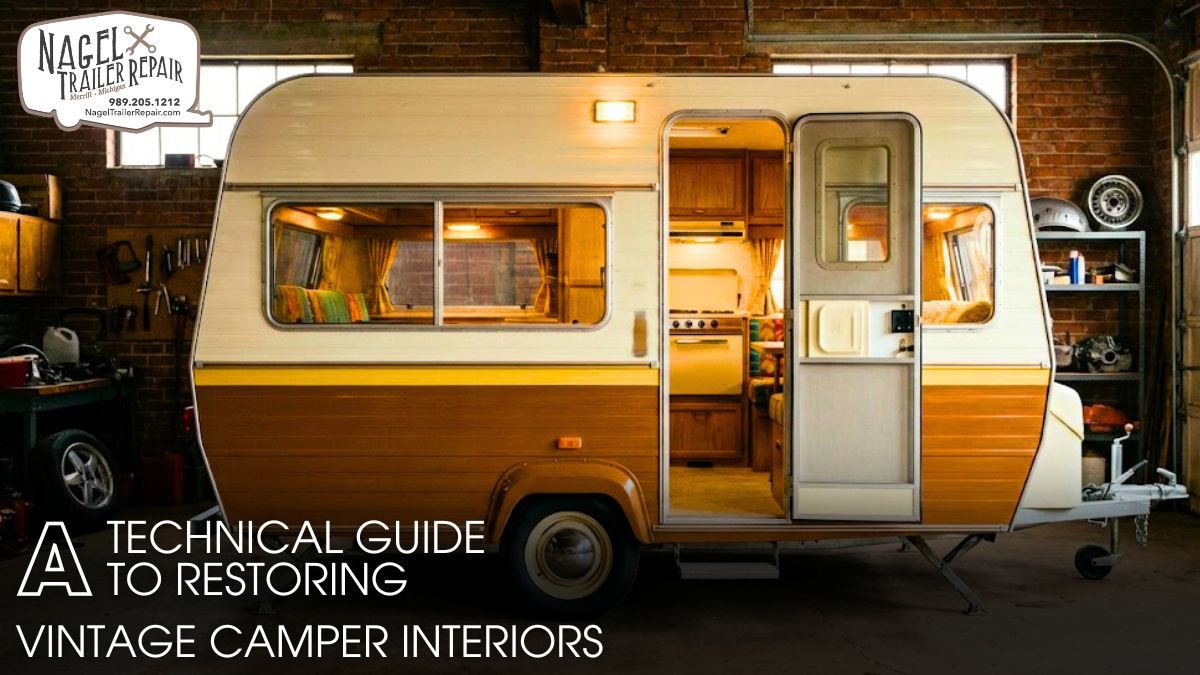
Restoring a vintage camper interior requires more than enthusiasm and fresh materials. Time, weather, and repeated travel place heavy demands on aging interiors, often hiding serious problems behind walls and cabinets. What looks like a simple refresh usually turns into a technical restoration once the real condition is revealed.
Many camper owners rush into interior work without checking structural stability, electrical safety, or moisture damage. This approach frequently leads to failed repairs, escalating costs, and shortened camper lifespan. Without a clear technical plan, even well-intentioned restorations can create new problems.
This guide walks you through a practical, professional approach to restoring vintage camper interiors. It focuses on inspection, systems, materials, and safety so you can restore your camper correctly, confidently, and with long-term reliability in mind.
Interior Restoration Overview:
Interior restoration in a vintage camper is a technical process, not a decorative one. Every interior component connects to the camper’s structure, weight balance, and mechanical systems. Ignoring this relationship often results in repairs that look good but fail under real use.
Most vintage campers were built with lightweight materials and minimal reinforcement. Over decades, vibration, moisture, and temperature changes weaken those materials. Interior panels, floors, and cabinets often hide early signs of failure that only become visible once restoration begins.
Professionals handling vintage trailer repair Michigan projects start by understanding how the camper was originally built and how the local climate has affected it. Michigan’s cold winters, humidity, and freeze-thaw cycles accelerate interior deterioration, especially where moisture becomes trapped.
Effective planning focuses on:
- Identifying original construction methods and materials
- Deciding what can be safely preserved
- Integrating modern upgrades without overloading the structure
- Creating a repair sequence that prevents rework
A clear restoration plan saves time, protects originality, and ensures every repair supports long-term performance.
Structural Interior Inspection:
Structural inspection is the most important step in restoring any vintage camper interior. Interior finishes often conceal serious damage, and skipping inspection almost guarantees future failure.
Water intrusion is the leading cause of structural interior damage. Leaks around windows, roof seams, and plumbing slowly rot wall framing and floors. Over time, this weakens load paths and causes cabinets, doors, and paneling to shift.
A proper inspection includes:
- Opening select wall sections to check framing
- Testing floors for soft spots and delamination
- Examining ceiling curves for sagging or stress
- Inspecting fasteners, joints, and structural connections
In vintage camper repair Michigan services, interior rot commonly develops from condensation during cold seasons. Warm interior air meets cold exterior surfaces, creating moisture inside walls and floors.
Addressing structural issues first prevents cosmetic repairs from hiding deeper failures. Solid framing and flooring create a stable foundation for all other restoration work.
Electrical System Restoration:
Electrical systems in vintage campers rarely meet modern safety expectations. Original wiring was designed for minimal power use and lacks proper grounding, insulation, and circuit protection.
As campers age, wiring insulation becomes brittle, connections loosen, and splices multiply. These conditions significantly increase the risk of shorts, overheating, and fire.
Electrical restoration should begin with a complete system evaluation. Many restorations require full rewiring to ensure safety and reliability.
Best practices include:
- Removing outdated or damaged wiring
- Installing RV-rated copper conductors
- Adding modern circuit breakers and grounding
- Separating AC and DC systems correctly
Specialists in classic trailer repair Michigan work often retain original light fixtures and outlets while upgrading the internal wiring. This preserves the vintage appearance while delivering modern safety.
Upgraded electrical systems support today’s appliances, reduce maintenance issues, and improve confidence during long trips.
Plumbing and Fixtures Repair:
Plumbing problems are common in older campers and often cause the most interior damage. Aging pipes crack, fittings leak, and drainage systems clog or fail entirely.
Older campers typically used rigid piping that does not tolerate vibration or freezing well. Over time, even minor leaks can destroy flooring, cabinetry, and wall framing.
Effective plumbing restoration focuses on durability and accessibility:
- Replacing old lines with flexible, freeze-resistant materials
- Improving routing to reduce stress points
- Rebuilding drains with proper slope and venting
- Installing compact, RV-rated fixtures
Projects involving Michigan Camper restoration must account for winter storage and temperature extremes. Plumbing systems should be easy to drain, inspect, and service.
Well-designed plumbing protects restored interiors and prevents repeat water damage, one of the most expensive restoration failures.
Interior Surface Restoration:
Interior surfaces define the character of a vintage camper, but they also contribute to structural strength. Wall paneling, cabinets, and floors work together to stiffen the camper body.
Whenever possible, preserving original materials maintains authenticity. However, weakened surfaces must be reinforced or replaced correctly to avoid trapping moisture or adding unnecessary weight.
Successful surface restoration includes:
- Strengthening panel backing rather than full removal
- Rebuilding cabinets with lightweight structural materials
- Refinishing surfaces with moisture-resistant coatings
- Replacing damaged floors with sealed, flexible options
Professionals handling vintage trailer repair Michigan works often recreate original finishes using modern adhesives and sealants. These materials last longer and perform better than those originally used.
Balanced surface restoration improves durability while preserving the vintage look that owners value.
Safety and Final Finishing:
Safety upgrades complete the restoration process and prepare the camper for real-world use. Vintage campers were built before modern safety standards became common, making updates essential.
Ventilation plays a critical role in controlling moisture, heat, and exhaust gases. Fire prevention measures also protect both the camper and its occupants.
Final restoration steps should include:
- Installing smoke and carbon monoxide detectors
- Improving ventilation near cooking and heating areas
- Securing cabinets and fixtures for travel conditions
- Testing all systems before road use
Finishing work should seal joints, protect surfaces, and confirm that everything performs as intended. A final inspection ensures the camper can handle vibration, weather changes, and extended trips.
For anyone pursuing camper repair in Michigan, these finishing steps separate short-term fixes from professional-grade restoration.
The Role of Professional Maintenance:
Professional maintenance plays a critical role in keeping vintage trailers functional, safe, and enjoyable over time. Skilled technicians understand how aging materials behave and know where hidden problems usually develop. Their experience helps prevent minor issues from turning into costly structural or mechanical failures.
Regular professional care ensures that interior components remain structurally sound, systems operate safely, and original materials are preserved whenever possible. Technicians also identify moisture intrusion, alignment issues, and wear patterns that are easy to overlook during DIY repairs.
When it comes to moving parts like windows, professional maintenance becomes even more important. Experts can correct frame distortion, repair worn tracks, and restore smooth operation without damaging original hardware or finishes. This level of care improves usability, protects the trailer’s value, and extends its lifespan through proper, informed intervention rather than temporary fixes.
Conclusion:
Restoring a vintage camper interior is a technical commitment that rewards careful planning and skilled execution. Rushing the process or ignoring structural and system issues often leads to higher costs and repeated repairs later on.
A methodical approach that prioritizes structure, systems, surfaces, and safety delivers results that last. Ultimately, interior restoration is not only about appearance—it is about reliability, protection, and usability. For owners investing in vintage trailer repair Michigan services, trusting the experts at Nagel Trailer Repair ensures your camper remains safe, functional, and ready for the road for years to come.