


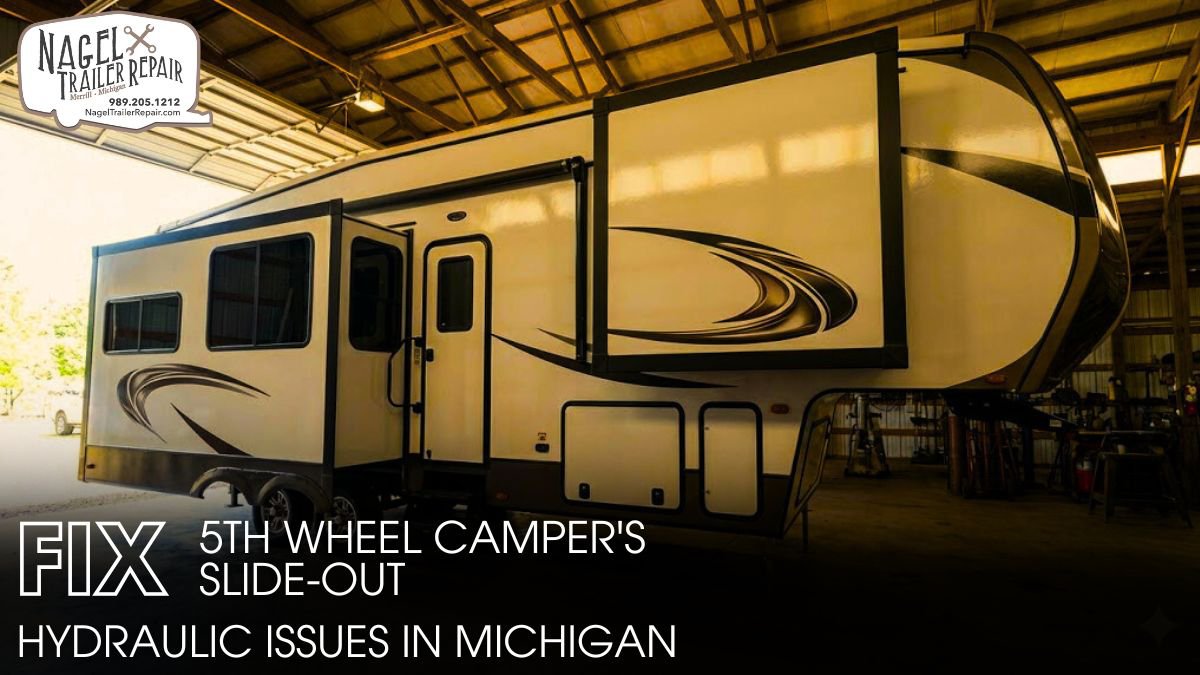
Slide-out systems are essential to the comfort and functionality of a fifth wheel camper, especially for travelers across Michigan. When these systems work smoothly, they transform limited space into a livable interior. However, hydraulic slide-out performance is often overlooked until a failure disrupts travel plans or seasonal use.
Hydraulic slide-out issues can develop quietly and worsen over time. Leaks, pressure loss, and slow or uneven movement are common problems—often intensified by Michigan’s cold temperatures and moisture exposure. Ignoring these symptoms can lead to structural damage and costly repairs.
This guide explains how to fix fifth wheel camper slide-out hydraulic issues in Michigan using proven diagnostic and repair methods. You will learn how to identify problems early, understand climate-related causes, and apply preventive solutions that keep your camper reliable year-round.
Understanding Slide-Out Hydraulics:
Hydraulic slide-out systems give fifth wheel campers the strength needed to move large, heavy slide rooms smoothly. Unlike electric systems, hydraulic setups handle higher loads and provide more consistent movement, which makes them common in larger fifth wheel models. These systems rely on pressurized hydraulic fluid to extend and retract slide-outs with precision.
When you activate the slide-out switch, the hydraulic pump pushes fluid from the reservoir through hoses and valves into hydraulic cylinders. The cylinders then convert pressure into motion, allowing the slide room to move evenly. Every component must work together. Even a minor issue can disrupt the balance and affect performance.
From a Michigan 5th wheel camper repair standpoint, many hydraulic problems do not appear suddenly. Instead, they develop gradually as seals wear down, fluid degrades, or fittings loosen. Michigan’s changing seasons add stress to these systems, especially during cold starts and spring reactivation.
Hydraulic slide-out systems depend on:
- Clean, properly rated hydraulic fluid
- Consistent pressure across all cylinders
- Intact seals and hoses
- Accurate alignment between moving parts
Understanding how the system operates helps camper owners recognize early issues and know when to seek professional slide out repair services before damage spreads.
Common Slide-Out Hydraulic Failures:
Hydraulic slide-out failures often begin with pressure loss. When the system cannot maintain proper pressure, slide-outs move slowly or fail to complete their cycle. Worn seals, small leaks, or trapped air usually cause this issue.
Fluid leaks represent another common failure. Hydraulic hoses and fittings degrade over time, especially when exposed to cold temperatures and moisture. Even a slow leak can reduce performance and introduce contaminants that accelerate wear throughout the system.
Pump-related problems also occur frequently. A failing pump may struggle to generate pressure, overheat during operation, or stop working entirely. Electrical issues, internal wear, and contaminated fluid often contribute to pump failure.
Technicians handling RV repair Michigan services , commonly address failures such as:
- Deteriorated cylinder seals
- Brittle or cracked hydraulic hoses
- Sticking or contaminated valves
- Weak or failing pump motors
Addressing these problems early prevents further strain on the slide-out structure and reduces the risk of costly frame or floor damage.
Signs of Hydraulic Problems:
Hydraulic issues often provide warning signs long before complete failure occurs. One of the earliest indicators is slow slide-out movement. When pressure drops, the system takes longer to extend or retract, placing additional stress on the pump and cylinders.
Uneven slide-out movement signals a more serious issue. When one side moves faster than the other, internal pressure imbalance or valve malfunction is usually the cause. Continued operation under these conditions can twist the slide-out frame and damage interior walls or flooring.
Unusual sounds also deserve attention. A whining noise often indicates pump strain or restricted fluid flow, while clunking or jerking sounds may point to air trapped in the system. These symptoms become more noticeable during colder months in Michigan.
Other warning signs include:
- Slide-outs stopping before fully extending
- Visible hydraulic fluid near fittings or cylinders
- Increased power draw during operation
- Repeated need to reset controls
When these symptoms appear, consulting a professional camper repair Michigan service provider helps prevent further system damage and ensures safe operation.
Causes in Michigan Climate:
Michigan’s climate plays a significant role in hydraulic slide-out issues. Cold temperatures thicken hydraulic fluid, slowing its movement through hoses and valves. This added resistance forces pumps to work harder and accelerates wear on internal components.
Moisture exposure creates another challenge. Rain, snow, and road salt contribute to corrosion on fittings and valve assemblies. Corrosion weakens sealing surfaces and restricts fluid flow, leading to inconsistent pressure and eventual leaks.
Seasonal storage further complicates the issue. When owners store fifth wheel campers without proper winterization, hydraulic seals may dry out or shrink. Condensation inside the system can contaminate fluid, creating problems when the camper returns to use in spring.
Climate-related problems often addressed during 5th wheel camper repair Michigan include:
- Cold-weather seal hardening
- Corroded fittings and valves
- Moisture-contaminated hydraulic fluid
- Damage caused by improper winter storage
Recognizing how Michigan’s weather affects hydraulic systems allows owners to plan maintenance and reduce unexpected failures.
Expert Slide-Out Repair Process:
Professional hydraulic repair begins with a detailed inspection. Technicians measure system pressure, examine fluid condition, and inspect hoses, fittings, and cylinders for visible wear or leaks. Pressure testing helps pinpoint weaknesses that may not be immediately visible.
Once technicians identify the problem, they replace damaged components rather than relying on temporary fixes. New hoses, seals, and fittings restore proper pressure and reliability. If fluid contamination is present, technicians flush the system and refill it with manufacturer-approved hydraulic fluid.
Pump and valve repairs require specialized tools and expertise. Improper calibration can worsen alignment issues or create new pressure imbalances. That is why complex hydraulic repairs should always be handled by qualified RV repair Michigan professionals.
A thorough professional repair typically includes:
- System pressure and flow testing
- Leak identification and component replacement
- Fluid flushing and refilling
- Functional testing under load
This structured approach ensures the slide-out system operates smoothly and safely after repairs.
Preventive Maintenance Tips:
Preventive maintenance remains the most effective way to avoid hydraulic slide-out problems. Regular inspections help identify minor issues before they develop into major failures. Checking hydraulic fluid condition is especially important, as degraded or contaminated fluid reduces system efficiency.
Owners should inspect hoses and fittings for early signs of cracking or leakage. Addressing these issues promptly prevents pressure loss and fluid contamination. Using hydraulic fluid rated for cold climates also improves performance during Michigan winters.
Proper winterization protects the hydraulic system during storage. Cycling slide-outs before storage, relieving system pressure, and shielding exposed components reduce the risk of cold-related damage.
Effective preventive practices include:
- Annual professional hydraulic inspections
- Seasonal fluid checks and replacements
- Proper winterization before storage
- Avoiding slide-out operation in extreme cold
Routine service from experienced 5th wheel repair Michigan service providers helps extend system lifespan and minimizes unexpected repair costs.
The Role of Professional Maintenance:
Professional maintenance plays a critical role in keeping a fifth wheel camper safe, comfortable, and reliable—especially in Michigan’s demanding climate. When technicians service hydraulic slide-out systems, they do more than fix visible problems.
They test pressure levels, inspect seals and hoses, replace worn components, and ensure the system operates smoothly under load. This proactive approach prevents small hydraulic issues from turning into major structural failures, particularly during cold starts and seasonal transitions.
The same professional care helps protect your camper from harsh winter conditions. Experienced technicians inspect insulation points, seal air leaks, service heating systems, and verify that underbelly components remain protected from freezing temperatures. They also recommend cold-weather upgrades and proper winterization practices that maintain interior warmth and prevent moisture-related damage.
By relying on professional maintenance, owners reduce breakdown risks, improve system efficiency, and extend the lifespan of critical components. More importantly, expert servicing ensures that both mechanical systems and interior comfort features perform reliably, allowing your fifth wheel camper to stay functional, warm, and road-ready throughout Michigan’s cold seasons.
Final Thoughts:
Your 5th wheel’s hydraulic slide-out system is essential for comfort, but Michigan’s harsh weather can take a toll on its performance. Recognizing early warning signs is the best way to avoid costly breakdowns and ensure your camper remains road-ready.
From routine maintenance to complex system overhauls, professional intervention is key to longevity. If you suspect an issue, don’t wait for a total failure. Trust the experts at Nagel Trailer Repair for premier 5th wheel camper repair Michigan services. Schedule your call with us today and ensure your next trip is safe and seamless.