


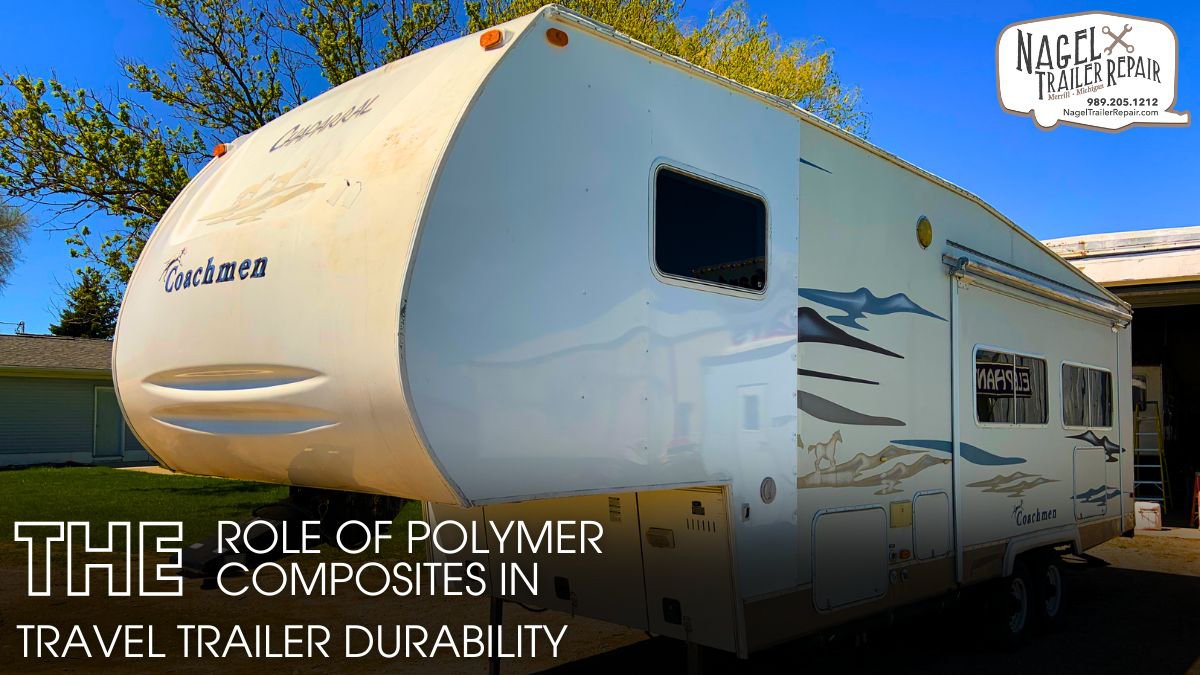
When you consider long-term strength in a travel trailer, you likely think of its frame, chassis, and outer shell. Aluminum and steel have been ruled for many decades, but polymer composites have come to revolutionize this thinking.
This isn’t a fad; this is a real technological upgrade in building, fixing, and maintaining trailers. If you have had to deal with 5th wheel camper repair Michigan services, you shall find that the clarity of the edge composites have over other old-school materials.
What are polymer composites?
Polymer composites combine a resin, typically epoxy, polyester, or vinyl ester, with various reinforcements like fiberglass, carbon fiber, or Kevlar. The resulting combination of materials is both flexible and super strong, something much better than its individual parts.
Metals rust, fatigue, or bend under the stress of weather and road vibes. Composites hold up year after year-perfectly suited to a rough life of a trailer or 5th wheel repair Michigan shops.
Key benefits include:
- High strength-to-weight ratio: as strong as steel but much lighter.
- Rust and corrosion proof: great for outdoor exposure.
- Fatigue resistant: Handles constant flexing without failing.
- Stable under heat and moisture: Less damage from expansion.
This means fewer structural fixes and longer-lasting parts for 5th wheel camper service in Michigan.
Why We Need This Shift?
Steel is tough but heavy, hiking fuel use and strain on towing. Aluminum is lighter yet dents easily, cracks under stress and corrodes from salt and moisture.
Composites fix these issues smartly. A composite trailer can be 30% lighter, easing towing, cutting fuel costs, and sparing tires and suspension. Owners of these lighter units often need less 5th wheel camper repair in Michigan.
They also insulate better against heat and noise, absorbing vibrations for a smoother, quieter ride-perfect for long hauls.
Common Types in Trailers:
- FRP (Fiberglass Reinforced Plastics): The standard for panels, roofs, and shells. Economical, high strength-to-weight ratio, durable, weather-resistant.
- Carbon Fiber: High-end material offering the best strength-to-weight and stiffness ratio. Very expensive, but worth it for top-of-the-line RVs.
- Kevlar: Very good resistance against impacts in vulnerable spots, like underbellies or front caps hit by debris.
These are updating repair methods too. Michigan 5th wheel repair pros now specialize in bonding and patching composites, extending trailer life affordably.
Design wins with composites:
Beyond the weight savings, composites allow for sleeker, more aerodynamic shapes that cut drag and boost fuel efficiency-curves that metals can’t match without welds.
They evenly distribute the loads and shun the weak points that crack. In 5th wheel camper repair Michigan models, this fights twisting and bending on the road.
Extras:
- No welds mean fewer failures.
- Better insulation for comfy interiors.
- Resistant to salt, chemicals, and corrosion.
Result: stronger, low-maintenance trailers to ensure dependable journeys.
Proven in the Real World:
Lab tests are one thing; roads, weather, and miles are another. That’s where composites shine.
They block moisture to prevent delamination and rot common in plywood setups. UV coatings keep looks and strength intact in sun. No corrosion means they thrive in humid or coastal areas, which is pretty big for 5th wheel camper service with all the seasons in Michigan.
They resist:
- Cracks from vibes and flex.
- Dings caused by gravel or bumps.
- Heat/cold stress.
- Fatigue over thousands of miles.
Shops realize fewer big fixes, less owner downtime, and higher resale for composite trailers.
What’s Next for Composites?
Material science is pushing boundaries. Expect bio-resins and recyclable fibers for greener builds without losing power; nano-additives will amp up toughness and scratch resistance.
Advanced molding, such as vacuum infusion, gives bubble-free, consistent parts for reduced maintenance.
For 5th wheel camper repair in Michigan, this means quicker adhesive fixes and modular swaps over full replacements.
Over the course of the next 10 years:
- Smart composites which detect stress.
- Thermoplastics for easy recycling.
- Hybrids of carbon, glass, and natural fibers.
These will create longer-lasting, efficient trailers that lower ownership costs.
Why Pro Maintenance Matters?
Even tough composites need check-ups. Pros can catch early issues such as bond fails, seal wear, or surface stress before these get worse.
Professionals repair without damaging strength or finish, and also tune noise dampening for quiet rides.
Routine service catches loose parts or misalignments, extending life and avoiding big bills. It will keep your trailer road-ready, stable, and durable for years to come.
Wrapping Up:
Polymer composites are the future of travel trailers, offering exceptional strength, lightweight, and resilience; they also promise to withstand unforgiving roads and weather. Mastering them is the key to repairing 5th wheel campers throughout Michigan.
They fight corrosion, ease towing, and boost efficiency to make trailers smarter and more sustainable. As technology advances, these materials will handle anything the journey brings.