

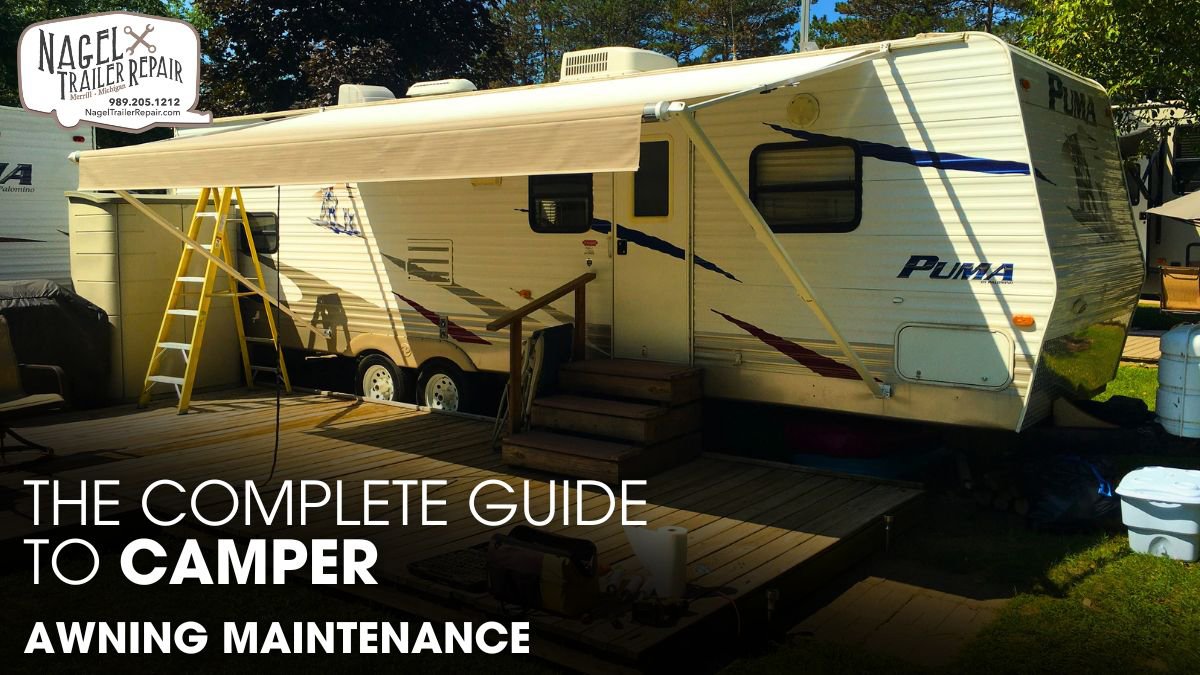
A worn-out camper awning can ruin an otherwise perfect road trip. Dirt buildup, mold stains, torn fabric, and rusted hardware not only make your RV look neglected but can also shorten the life of your awning and lead to costly repairs.
Many camper owners ignore small maintenance tasks until problems become impossible to overlook. Exposure to harsh sunlight, heavy rain, and strong winds gradually weakens the awning, causing fading, leaks, and mechanical issues that affect comfort on every trip.
This complete guide will help you clean, protect, repair, and store your camper awning properly. By following expert care tips from a trusted camper repair expert in Michigan, you can extend your awning’s lifespan, boost performance, and avoid costly damage with professional repair services.
Understanding Camper Awnings:
A camper awning does much more than provide shade during outdoor trips. It works as a protective extension of your RV and constantly faces sunlight, rain, wind, dust, and temperature changes. Because of this continuous exposure, the awning system experiences gradual wear on both the fabric and the mechanical parts.
Most camper awnings use either vinyl or acrylic fabric. Vinyl awnings resist water extremely well and clean easily, which makes them popular among RV owners. However, prolonged UV exposure slowly dries the material and causes cracking over time. Acrylic awnings handle heat better and allow airflow through the fabric, but they need regular waterproof treatment to maintain weather resistance.
The support system also plays a major role in awning durability. Most setups include aluminum arms, steel fasteners, roller tubes, torsion springs, and mounting brackets. If even one component weakens, the entire system can become unstable during heavy wind or rain.
Key parts that require regular attention include:
- Roller tube assembly
- Support arms and joints
- Torsion spring mechanism
- Fabric seams and stitching
- Electric motor and wiring
- Mounting brackets
Understanding how these components work together helps you spot early warning signs before major damage develops.
Routine Cleaning Essentials:
Routine cleaning remains one of the most important parts of camper awning maintenance. Dirt, tree sap, bird droppings, and road grime slowly break down protective coatings on the fabric. If debris stays trapped inside a folded awning, it creates friction that weakens the material during every extension and retraction cycle.
Start cleaning by fully extending the awning and rinsing loose debris with low-pressure water. Avoid pressure washers because high water pressure can damage stitching seams and separate fabric layers. Use a soft-bristle brush or microfiber cloth to remove stubborn dirt without scratching the surface.
Choose mild, pH-neutral cleaning products designed specifically for RV awnings. Harsh chemicals such as bleach or ammonia weaken synthetic fibers and reduce the fabric’s UV resistance. These chemicals may also discolor acrylic fabrics and dry out vinyl coatings.
For effective cleaning:
- Extend the awning completely
- Remove loose dirt first
- Apply diluted cleaner evenly
- Scrub gently in circular motions
- Rinse thoroughly with clean water
- Allow the fabric to dry fully
Mold and mildew often develop when owners store the awning while it is still damp. Black stains usually indicate fungal growth deep inside the fabric pores. Use enzyme-based mildew removers because they clean organic buildup without damaging waterproof coatings.
Never retract a wet awning for long periods. Moisture trapped inside folded fabric can cause:
- Mildew growth
- Fabric delamination
- Rust on hardware
- Musty odors
- Seam deterioration
If you must close the awning during rain, reopen it as soon as weather conditions improve and allow it to dry completely.
Preventing Wear and Damage:
Preventive maintenance helps you avoid expensive repairs and extends the overall life of the awning system. Most awning failures happen gradually due to constant environmental exposure rather than sudden defects.
Ultraviolet radiation remains one of the biggest threats to awning fabric. Continuous sun exposure breaks down the material at a molecular level, reducing flexibility and weakening structural strength. Over time, this process leads to fading, brittleness, and cracking.
Applying a UV protectant every few months helps reduce sun damage. Silicone-based protectants work best because they create a protective barrier without attracting excessive dirt or dust. Wind also causes serious structural stress. Strong gusts place pressure on support arms, roller tubes, and mounting brackets. Even a short storm can twist the frame or stretch the fabric beyond its design limits.
Watch for these warning signs of wind stress:
- Wrinkled canopy sections
- Loose mounting hardware
- Uneven fabric tension
- Bent support arms
- Clicking noises during operation
Water pooling creates another major problem. Standing water places concentrated weight on the center of the awning and stretches the fabric unevenly. Repeated pooling weakens stitching seams and permanently changes the canopy shape.
Lower one side of the awning slightly during rain to improve drainage. Some advanced systems include automatic water dump features, but regular manual monitoring still provides the best protection. Lubricating moving components also prevents unnecessary wear. Use silicone dry lubricant on pivot points, hinges, and support joints. Avoid heavy grease because it traps dirt and accelerates abrasion inside moving parts.
Fixing Common Awning Issues:
Even well-maintained camper awnings eventually develop small mechanical or fabric-related problems. Handling these issues early prevents more expensive damage later.
Small tears often appear after debris impact or excessive wind movement. If you ignore a minor puncture, normal awning tension can quickly expand the damage. Repair small tears using RV-grade repair tape combined with flexible sealant designed for outdoor fabric systems.
If damage reaches the seams or spreads across large sections, replacing the fabric usually becomes the safer option. Mechanical problems often begin inside the moving assemblies. Dirt buildup, corrosion, or lack of lubrication can cause the awning to stick or retract unevenly.
Common causes include:
- Corroded bearings
- Misaligned support arms
- Bent roller tubes
- Dry pivot joints
- Worn torsion springs
Never force a stuck awning open or closed. Excessive force can damage the motor, strip gear teeth, or bend aluminum arms permanently. Electric awnings require additional electrical inspection. Voltage drops, damaged wiring, or moisture intrusion can overload the motor system. Use a multimeter to check voltage output and inspect connectors for corrosion or cracked insulation.
Professional repairs become necessary when dealing with:
- Torsion spring replacement
- Motor failure
- Structural frame bending
- Wall bracket separation
- Large fabric replacement
Spring-loaded systems store high tension and can cause serious injury if handled incorrectly.
Proper Storage and Care:
Proper storage significantly affects how long a camper awning lasts. Poor off-season care often causes more damage than regular camping use.
Before storing the RV, clean and dry the awning completely. Moisture trapped inside rolled fabric encourages mold growth and weakens adhesive layers over time. Dirt left on the surface can also harden and create abrasive wear during storage.
Inspect the awning carefully before long-term storage. Focus on seams, brackets, support arms, and hardware connections. Tighten loose fasteners and lubricate all moving joints before retracting the system.
Important storage steps include:
- Remove all debris and moisture
- Inspect seams for separation
- Tighten mounting hardware
- Lubricate moving components
- Apply UV protection spray
- Cover exposed sections properly
Temperature fluctuations also affect awning materials. Repeated heating and cooling cycles expand and contract the fabric, which slowly weakens stitching and surface coatings.
Using a breathable awning cover adds extra protection against:
- UV exposure
- Road debris
- Dust buildup
- Moisture intrusion
- Surface abrasion
Avoid non-ventilated covers because trapped condensation can create mildew problems during storage.
Long-Term Maintenance Tips:
Long-term awning performance depends on consistency. Owners who follow a regular maintenance schedule usually avoid major repairs and extend the life of the system by several years.
Create a maintenance routine based on how often you travel and the climate where you camp. Coastal environments require more corrosion control, while desert regions demand stronger UV protection.
A good maintenance schedule should include:
- Monthly visual inspections
- Seasonal deep cleaning
- Lubrication every few months
- Hardware tightening checks
- Electrical system inspection
- Waterproof treatment applications
Pay attention to early warning signs such as sagging fabric, recurring leaks, fading, noisy motors, or uneven operation. These symptoms often indicate developing structural fatigue. Keeping a small awning maintenance kit inside the RV also helps you respond quickly to minor problems.
Useful tools include:
- Silicone lubricant
- Repair tape
- Seam sealant
- Stainless steel fasteners
- UV protectant spray
- Multimeter
- Soft cleaning brush
With proper cleaning, inspection, and storage, most camper awnings can remain functional for more than a decade.
The Role of Professional Maintenance:
Professional maintenance plays a critical role in keeping camper systems reliable, safe, and efficient during long-term travel. Experienced technicians can identify hidden fabric stress, weakened hardware, water pressure irregularities, and minor plumbing leaks before they turn into expensive structural damage. They also use specialized inspection tools to test seal integrity, electrical connections, and moisture buildup that most owners may overlook during routine maintenance.
Leak detection equipment helps professionals locate pressure loss, cracked fittings, and concealed water line damage without dismantling large sections of the camper. At the same time, trained maintenance teams can inspect moving exterior components and adjust tension systems.
They can also lubricate mechanical assemblies and replace worn parts with proper load-rated hardware. Regular professional servicing improves system performance, extends equipment lifespan, and reduces the risk of sudden failures during travel.
Final Thoughts:
Camper awning maintenance is not simply about appearance. It directly affects structural integrity, operational safety, and long-term ownership costs. Routine cleaning, preventive inspections, proper storage, and timely repairs help protect your investment and improve camping comfort.
By following a disciplined maintenance strategy, you can avoid premature failures, reduce repair expenses, and keep your camper awning operating smoothly through years of travel and outdoor use. Regular inspections and timely servicing also help prevent unexpected breakdowns during trips and protect your investment for the long term.
For reliable support, trust Nagel Trailer Repair, a trusted camper repair expert in Michigan, to handle inspections, repairs, and maintenance with precision. Professional service keeps your camper road-ready, improves safety, and gives you confidence before every adventure.