


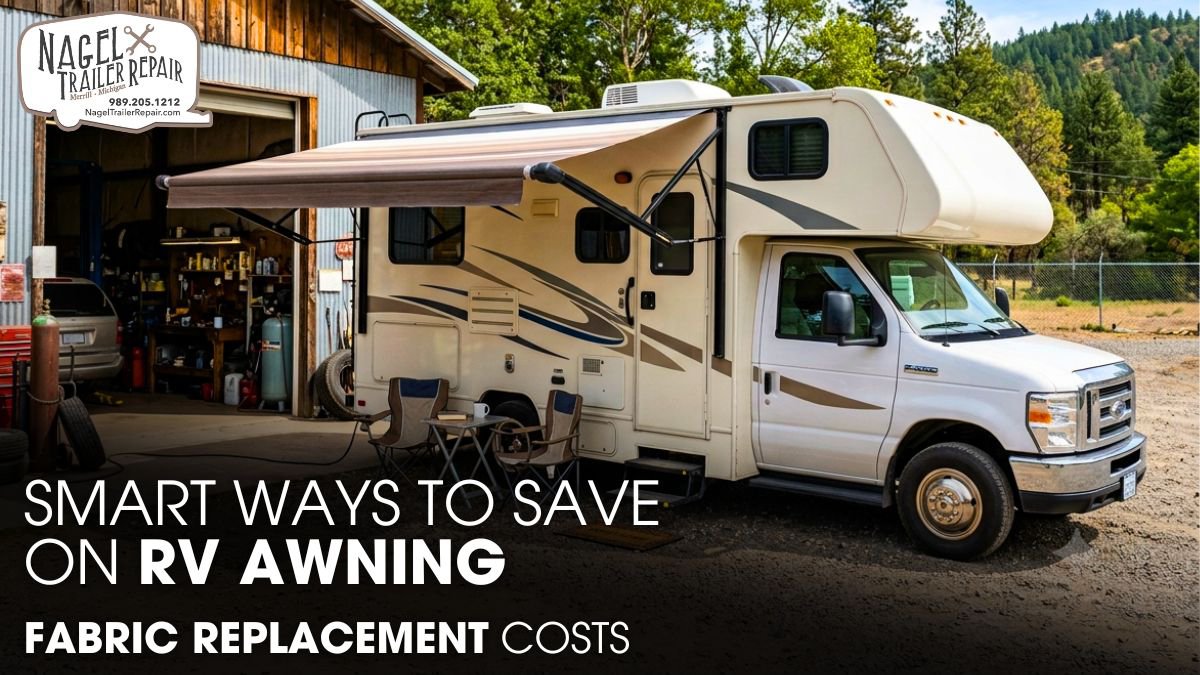
Your RV awning does more than provide shade—it protects your outdoor living space from intense sunlight, rain, and changing weather. When the fabric starts fading, tearing, or losing its water resistance, replacing it becomes an important maintenance task.
However, RV awning fabric replacement can quickly become expensive when you overlook material choices, measurements, labor rates, and unnecessary component replacements. Choosing the wrong fabric or delaying replacement can also increase long-term maintenance costs.
You can manage awning replacement costs with a smart plan. Compare fabric options, confirm accurate measurements, assess installation methods, and follow proper maintenance practices. An RV expert in Michigan can also help extend awning life, minimize repair expenses, and protect your RV investment.
Know When Awning Fabric Needs Replacement:
RV awning fabric constantly absorbs ultraviolet radiation, temperature fluctuations, moisture, wind loading, and mechanical stress during extension and retraction. Over time, these forces weaken the coating, fibers, seams, and attachment points. A few cosmetic stains do not automatically justify replacement, but extensive cracking, fabric brittleness, seam separation, and repeated tearing indicate structural deterioration.
Extend the awning fully and inspect it under good lighting. Run your hands carefully over the fabric to identify hardened or unusually thin areas. Pay particular attention to the corners and the sections surrounding the awning rail and roller tube because these areas experience concentrated mechanical stress.
Before ordering replacement fabric, inspect the complete awning hardware. Bent roller tubes, worn springs, or damaged support arms can cause uneven tension and premature fabric failure. If the frame and operating components remain serviceable, fabric-only replacement can reduce costs significantly compared with replacing the entire awning assembly.
An experienced RV repair shop in Michigan can assess the roller, arms, brackets, and fabric before recommending repairs. U.S. replacement costs commonly range from about $150–$750 for fabric alone, while a complete awning replacement can cost substantially more.
- Look for UV cracking, pinholes, and brittle areas.
- Inspect hems, stitching, and fabric channels.
- Check roller-tube alignment before ordering.
- Test manual or powered retraction.
- Repair minor isolated damage when practical.
Compare RV Awning Fabric Costs:
Fabric price depends on more than the canopy’s length. Material type, fabric construction, width, attachment method, brand compatibility, and warranty can all change the final purchase price. A small measurement error can also turn an inexpensive replacement into an expensive return and reinstallation project.
Measure the existing awning carefully according to the replacement manufacturer’s instructions. Verify the distance between mounting brackets, the actual fabric dimensions, the roller attachment, and the awning-rail configuration. Do not assume that two awnings with the same advertised length use identical replacement fabric.
For example, current U.S. cost data shows vinyl fabric for smaller awnings can start near $100–$200, while larger vinyl sections can reach $350–$600. Acrylic generally costs more, with larger replacement sections reaching approximately $500–$750.
When comparing quotations for RV repairs in Michigan, assess the total landed cost instead of focusing only on fabric prices. Factor in shipping, taxes, mounting hardware, replacement fasteners, professional installation, and disposal fees. This approach provides a more accurate cost comparison and helps prevent unexpected expenses during the repair.
- Verify dimensions before placing an order.
- Confirm the fabric’s attachment configuration.
- Compare OEM and compatible aftermarket options.
- Include shipping in your cost calculation.
- Check warranty terms and material specifications.
Choose Cost-Effective Awning Materials:
The correct fabric depends on the RV’s operating environment. Vinyl and acrylic behave differently because they use different material structures. Vinyl generally provides strong water resistance and easy cleaning, while acrylic allows greater air permeability and performs well against prolonged sunlight and fading.
Current pricing data shows vinyl generally costs less than acrylic. Depending on awning size, vinyl replacement fabric can range from approximately $100–$600, while acrylic can range from roughly $150–$750.
Do not automatically select the cheapest material. Evaluate the fabric’s resistance to UV degradation, mildew, tearing, temperature cycling, and repeated folding. An inexpensive fabric that deteriorates quickly can produce a higher annualized cost than a moderately more expensive fabric with better durability.
Consider how you use your RV before choosing replacement fabric. Seasonal campers may focus on upfront cost, while frequent travelers benefit from UV-resistant materials built for extended sunlight exposure. For dependable guidance, explore professional RV services in Michigan to select fabric that matches your travel frequency and climate conditions.
- Match material properties to your climate.
- Consider UV exposure and camping frequency.
- Compare fabric warranties before purchasing.
- Evaluate water resistance and breathability.
- Calculate long-term cost rather than initial price alone.
Reduce RV Awning Installation Costs:
Installation can significantly affect the final replacement bill. A straightforward fabric replacement requires removal of the old canopy, controlled handling of the roller assembly, installation of the new fabric, correct alignment, and operational testing. Power awnings can add electrical components and troubleshooting requirements.
Current U.S. estimates place professional RV awning installation labor around $100–$500, depending on the configuration and complexity. Fabric-only replacement generally costs less than complete assembly replacement because the technician can retain serviceable hardware.
DIY installation can reduce labor expenses, but the roller tube can contain substantial stored spring energy. If you do not understand the spring-tension mechanism, forcing the assembly apart can cause uncontrolled rotation or component damage.
A skilled technician can detect bent arms, damaged brackets, worn bearings, or alignment issues during installation. When choosing “mobile RV repairs in Michigan”, request an itemized estimate before approving the work. Review fabric, labor, and component costs separately to understand your expenses and avoid unexpected charges.
- Request a written labor estimate.
- Confirm whether removal and disposal are included.
- Ask for hardware inspection before installation.
- Compare independent-shop and dealer pricing.
- Use professional service for spring or electrical work.
Extend the Life of New Awning Fabric:
The cheapest replacement is the one you can postpone through proper maintenance. Dirt, tree sap, bird deposits, moisture, and biological growth can remain on the fabric and accelerate surface deterioration. Folding contaminated or wet material also increases the risk of mildew and persistent staining.
Clean the canopy using the manufacturer’s recommended method. Avoid aggressive chemicals or abrasive tools that can damage coatings or weaken fibers. After cleaning, allow the fabric to dry completely before retracting it for extended storage.
Wind creates another major source of stress. When gusts strike a deployed awning, the fabric transfers dynamic loads into the roller tube, support arms, brackets, and RV mounting structure. Retract the awning during severe weather rather than allowing repeated high-load movement.
Routine inspection can catch minor issues before they turn into costly repairs. Loose mounting fasteners, worn attachment points, or uneven tension can accelerate fabric damage. Searching for “RV repair near me” can help you find professional assistance to address these problems early and extend your RV awning’s service life.
- Clean the canopy at appropriate intervals.
- Dry the fabric completely before storage.
- Retract the awning during severe weather.
- Inspect seams and attachment points regularly.
- Address abnormal noise or resistance immediately.
Budget for Future RV Awning Repairs:
A realistic replacement budget should include the possibility of related component repairs. Current U.S. estimates place complete RV awning replacement at approximately $250–$2,500, while some larger or more complex installations can reach about $3,000 with professional labor. Fabric-only replacement remains substantially less expensive when the existing hardware works correctly.
Your budget should account for fabric, labor, hardware, shipping, and diagnostic work. Power awnings can also require motor, wiring, switch, or control-system repairs. Replacing functional components simply because the fabric has failed increases the invoice without necessarily improving reliability.
Keep a maintenance record containing the awning manufacturer, model, dimensions, fabric material, installation date, previous repairs, and replacement components. This information can make future parts identification much easier and reduce ordering errors.
During RV maintenance in Michigan, a technician should inspect the roller tube for bends, support arms for deformation, brackets for looseness, and the drive system for unusual operation. Addressing minor mechanical faults before fitting new awning fabric can prevent premature wear, reduce repair costs, and extend the replacement fabric’s service life.
- Maintain a dedicated awning repair budget.
- Record fabric dimensions and model information.
- Inspect hardware before ordering replacement fabric.
- Separate essential repairs from optional upgrades.
- Obtain multiple written estimates for major repairs.
The Role of Professional Maintenance:
Professional maintenance helps RV owners control long-term costs by identifying problems before they become expensive repairs. A qualified technician can inspect awning fabric, seams, roller tubes, support arms, brackets, and attachment points for early signs of wear.
Accurate diagnosis helps determine whether a simple repair or complete fabric replacement makes financial sense, while proper installation prevents premature fabric failure and unnecessary component replacement. The same preventive approach applies to an RV’s electrical system.
A converter manages shore-power AC to DC conversion and battery charging, while a high-quality inverter converts battery DC power into AC power for compatible appliances when shore power is unavailable. Professional inspection ensures proper sizing, wiring, ventilation, overload protection, and battery compatibility, helping prevent voltage problems, overheating, equipment damage, and costly electrical failures.
Conclusion:
RV awning fabric replacement does not have to become a high-cost repair. Start by separating fabric deterioration from mechanical failure. If the roller tube, arms, brackets, and drive components remain serviceable, fabric-only replacement can substantially reduce the project scope and avoid paying for functional hardware.
Control costs through accurate measurement, appropriate material selection, and transparent labor estimates. Current U.S. market references place fabric-only replacement broadly around $150–$750, with professional installation and larger awnings increasing the final invoice.
Don’t wait for costly awning damage. Contact Nagel Trailer Repair today and get help from an RV expert in Michigan with fabric care, hardware inspections, and preventive maintenance. Take action now to extend your awning’s service life, prevent premature wear, and protect your RV investment.